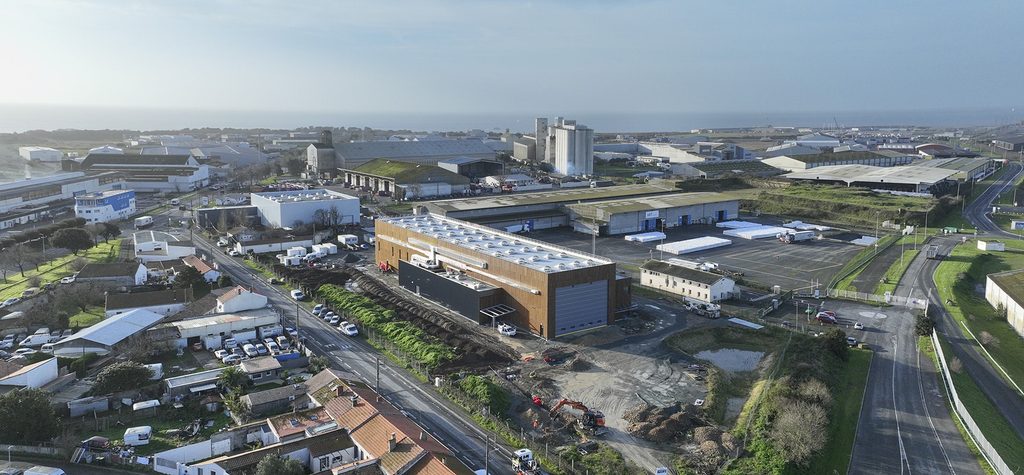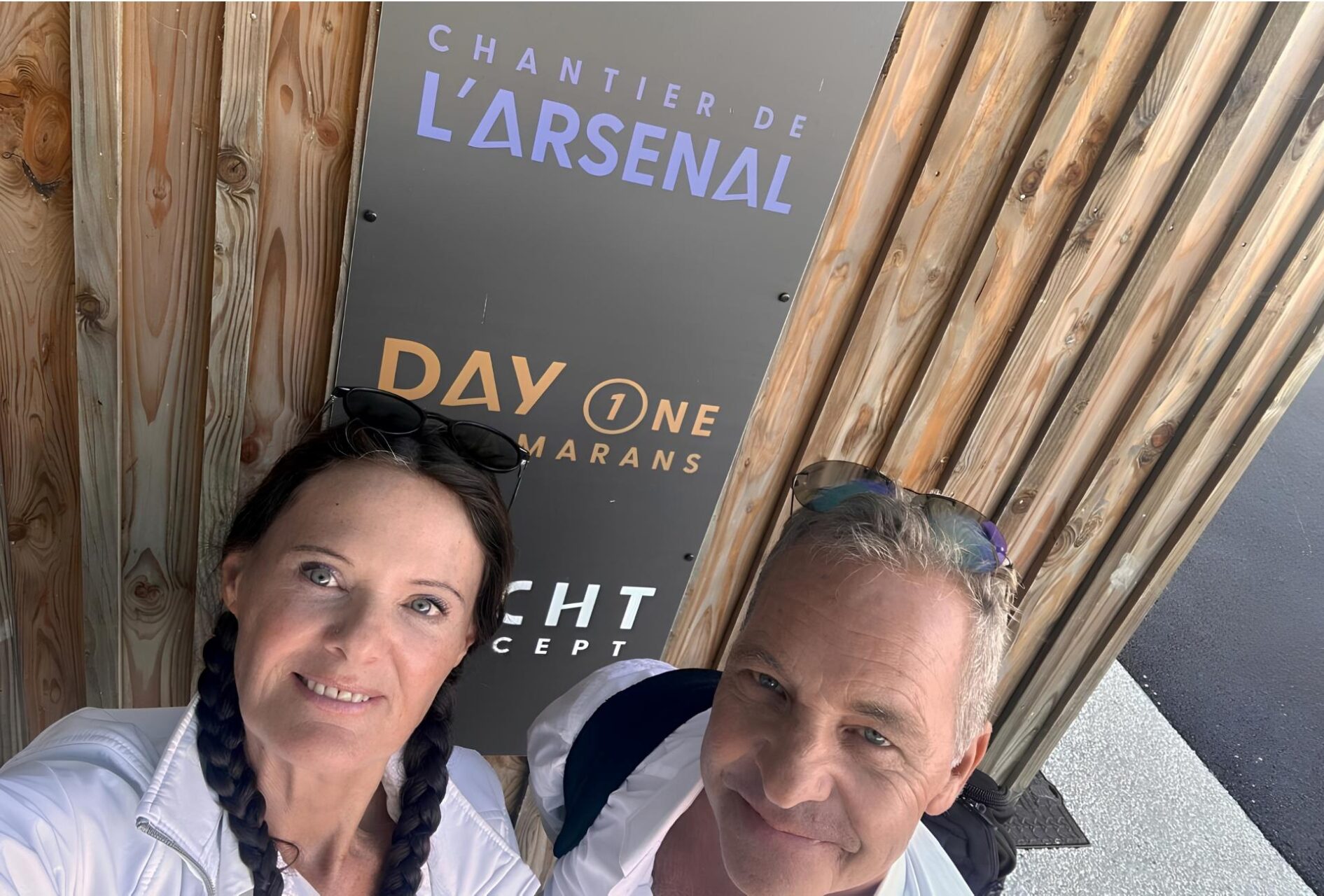
During their stay in La Rochelle for the Grand Pavois boat show, Peter Cohen, director of Caribbean Multihulls, and Anne-Sophie Gomez, sales representative, took a day off to visit the DAY 1 Catamarans shipyard’s brand-new factory.
It was a welcome change of pace from the marina: a chance to meet the people behind the catamarans again and see how a concept takes shape on the workshop floor.
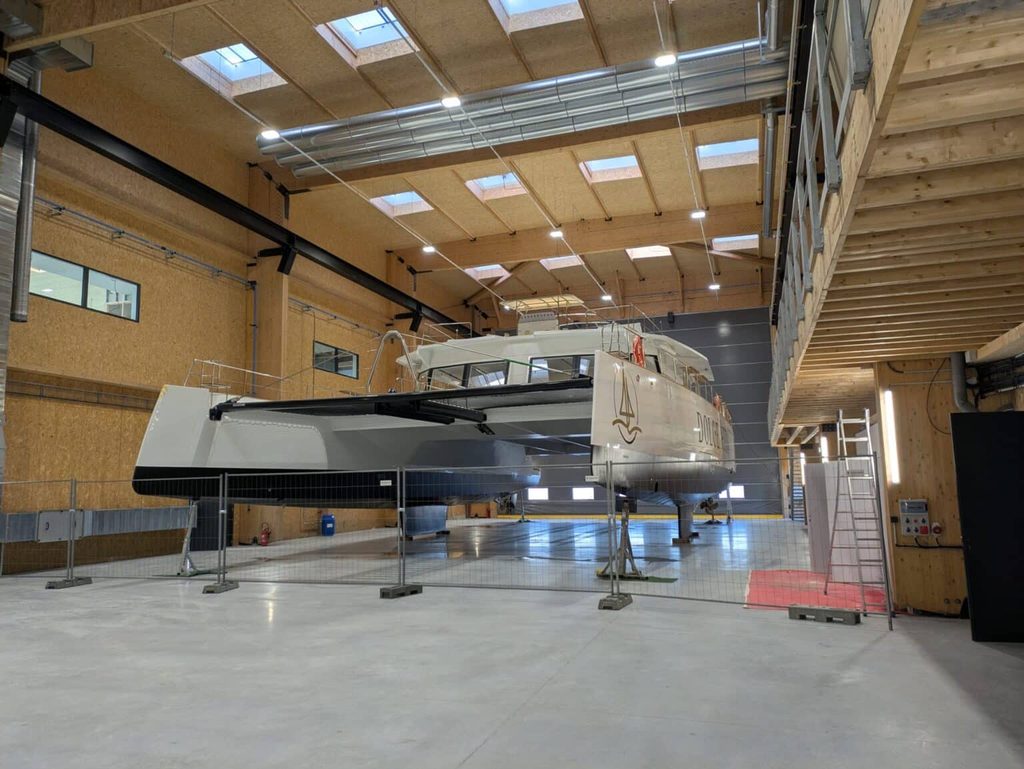
Three sailing or power catamarans were under construction, each at a different stage and customised for its market. Seeing them side by side made the visit rewarding. Rather than discussing customisation in the abstract, we could see how passenger needs influence a boat’s layout and build.
After many years around commercial multihulls, practical details still catch our attention: access to systems, clear circulation and how a crew works on board a day passenger catamaran. It is satisfying to see these questions considered early, and to discuss them with the shipyard team.
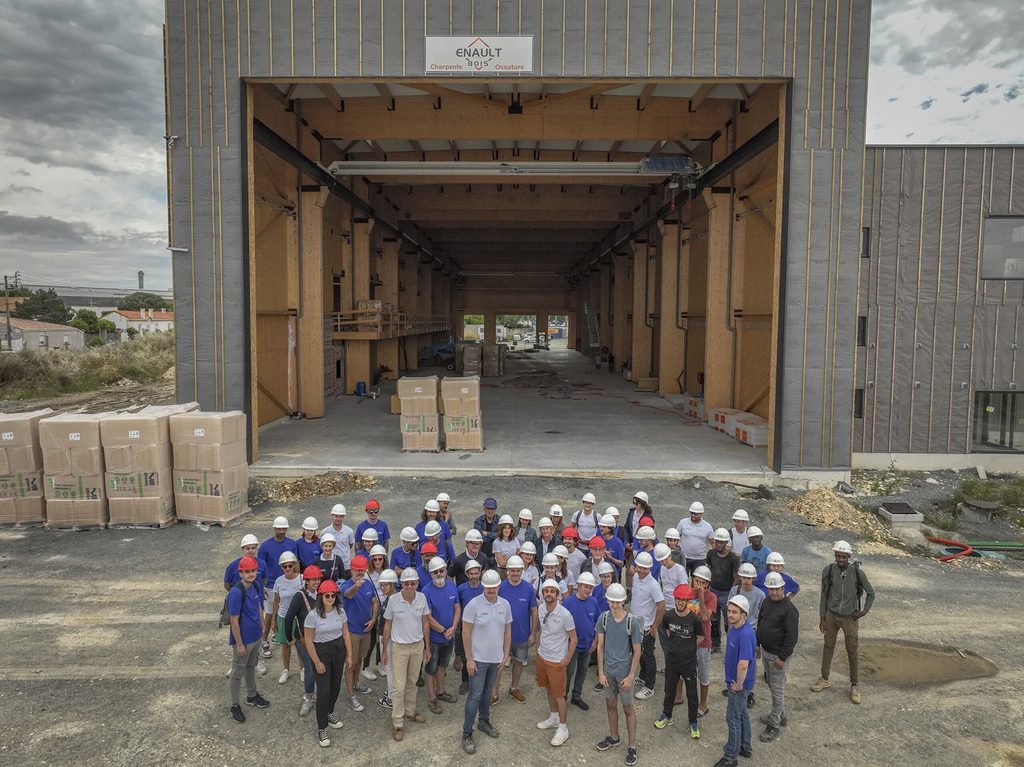
A different approach to construction
DAY 1 builds without a conventional full-size hull mould. Large, flat composite panels are made by resin infusion, using a foam core and fibreglass skins. They are cut to size with a water jet, then assembled on a wooden frame.
This method changes the conversation between builder and buyer of a passenger boat. With a fixed mould, a project often starts from a set hull shape, with the interior adapted around it. Flat panels allow dimensions and arrangements to be developed around the intended use, within the limits of the design and shipyard.
For a day charter or transport business, customisation is about more than finishes. Owners can discuss
- where guests board,
- how they move during the day between cockpit and lounge,
- where the bar sits,
- how much open deck is needed for the day’s activities,
- etc.
These choices influence passenger comfort and crew work throughout the operation.
DAY 1 Catamarans says the method allows builds up to 90 feet and beyond. The main practical limit described during our visit was a maximum beam of 12 metres, so the completed vessel can leave the facility.
Three builds, three sets of requirements
The catamarans in the DAY 1 yard were not variations of one standard layout. Each was customised for its market, a reminder that passenger transport is not one-size-fits-all.
A sightseeing operator, private day charter company and scheduled shuttle may need different passenger flows, deck arrangements and onboard services.
- A bar can be positioned to suit the route.
- Seating can be planned for conversation, dining or events.
- Netting, access points and propulsion can also form part of the design brief…

The early process matters: owner, naval architect and builder need to agree what the boat must do before plans are settled.
For investors, this stage can feel exciting and demanding. There is room to shape a new asset around a business plan, but each decision affects capacity, comfort, crew routines and cost.
The best transport project is not the one with the most options, but the one that fits its intended operation.
Easy movement and access on board
The flat, continuous catamaran deck is a notable feature of the DAY 1 Catamarans concept.
Clear circulation helps passengers move safely and lets crew manage boarding without bottlenecks. It also creates flexible space for services, from daytime excursions to private events.

The layout can be designed to support wheelchair access and passengers with reduced mobility. That matters to guests and operators planning an inclusive service.
Access deserves attention from the first design conversations, alongside passenger capacity, gangway arrangements and the route to the main lounge.
The inverted bow gives the catamarans a distinctive, modern shape. On the shop floor, it was easy to appreciate how the profile sets DAY1 apart from traditional passenger transport boats.
Hull performance depends on the finished design and operating conditions, so buyers should discuss it in relation to their routes.
Built with maintenance in mind
A working boat spends its time carrying passengers, not sitting in a marina for photographs. Maintenance access is part of the business case. During construction, we could see how transverse beams provide routes for wiring and plumbing, as well as access to pumps.
Keeping systems reachable can make inspection and repair more straightforward over the vessel’s life. For a transport operator with a tight schedule, less time spent tracing a line or opening finished areas is valuable. Practical decisions like this shape the day-to-day experience of owning a boat.
Seeing the builds at different stages made the process easier to follow, from composite structure to later fit-out. For a buyer, asking questions while key areas remain visible is reassuring. It helps turn a broad yacht concept into a clear specification and shows how each choice may work in service.
Considering hybrid propulsion
DAY 1 Catamarans presented an independent hybrid arrangement, with a diesel engine and electric motor on each side.
The systems are separate, giving operators options for how they use the boat. Electric power can support quiet navigation, while diesel remains available for other parts of the route.
The system can also regenerate energy under sail. For businesses where quiet operation is welcome, that is appealing. Its value depends on routes, daily hours, charging arrangements, energy use and the balance between electric and diesel propulsion.
Hybrid is not automatically right for every project. Buyers should consider operating profile, expected performance, maintenance and local requirements before selecting a package. A direct discussion with the Caribbean Multihulls can connect technical choices with business realities.
Capacity, use and project planning
The capacity figures give an idea of the range:
- around 120 passengers for a 65-foot catamaran,
- about 250 for an 85-foot one,
- and approximately 260 for a 90-foot vessel.
Final capacity depends on approved configuration and certification, so each project should be checked against its service and local rules.
DAY1 Catamarans indicated a price range of approximately €1.7 million to €2 million for a conventional custom 65-foot build.
In some markets, a private day charter can be priced at up to €15,000. These are reference points, not a promise of return: utilisation, season length, crew, fuel, maintenance, financing and tourism demand shape the business case.
Caribbean Multihulls estimates a possible three-year payback for a 65-foot vessel, not a guarantee. Investors should test this against a specific route, realistic bookings and operating costs. Strong figures matter, but so does confidence that the boat suits its customers.
The schedule includes about two months for studies and design, followed by roughly six months of construction. DAY1 Catamarans states a maximum lead time of one year from confirmed order and deposit. Production planning is already looking towards 2027–2028, so early conversations are worthwhile for buyers with a target launch date.
What stood out during our visit to the DAY 1 Catamarans shipyard
Leaving the DAY 1 Catamarans shipyard, we had a clear picture of what makes DAY1 different:
- construction that supports custom dimensions and layouts,
- practical attention to access and maintenance,
- options matched to commercial use.
Seeing three boats at different stages made the process tangible and gave us plenty to think about. For Peter and Anne-Sophie, this visit to the new factory was an opportunity to look closely, ask questions and compare the builds with operators’ needs.
For a prospective owner, that curiosity is a good starting point. A new catamaran is a significant investment; the right project begins with clear questions about passengers, routes, services and the business to support.
DAY1 Catamarans are not a ready-made answer for every passenger transport operator. They are a platform shaped around a defined use, with decisions made alongside the builder and checked against certification, local marine and operating conditions and commercial plans.
If you are considering passenger transport, day charter or tourism, a conversation about your requirements can help establish whether the concept fits. Contact us now.