Long-term Impact
Fountaine Pajot estimates that 80% of a yacht’s carbon footprint occurs during use, with 20% during construction.
The ODSea Lab therefore addresses the entire lifecycle of each catamaran – from eco-conception and recyclable materials to renewable energy and alternative fuels.
By 2025, 50% of the range will be available with ODSea+ technologies, and by 2030 the shipyard aims to offer a fully carbon-neutral fleet.
ODSea brochure
Click to consult the full brochure.
Fountaine Pajot on board for environmental transition in the marine industry
In March 2022, Fountaine Pajot launched an ambitious environmental programme to pioneer the transition towards low-carbon boating. Through the ODSea Lab (Observe, Design & Save), the shipyard is reshaping how catamarans are designed, built, and sailed, with a clear target: achieving carbon neutrality by 2
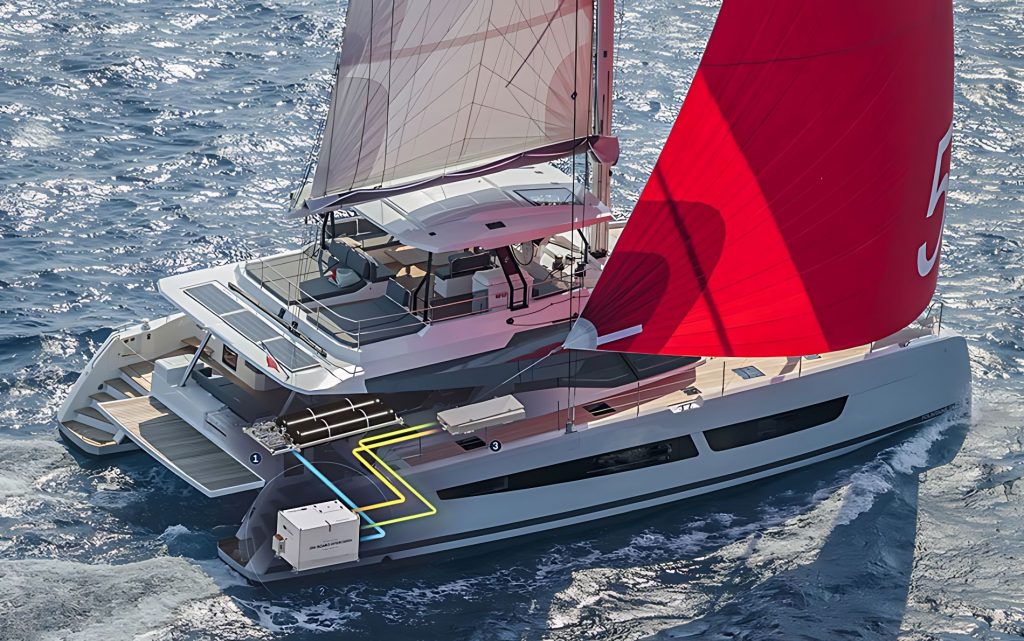
Eco-navigation innovations
- ⚡ Smart Electric propulsion – hybrid and fully electric solutions
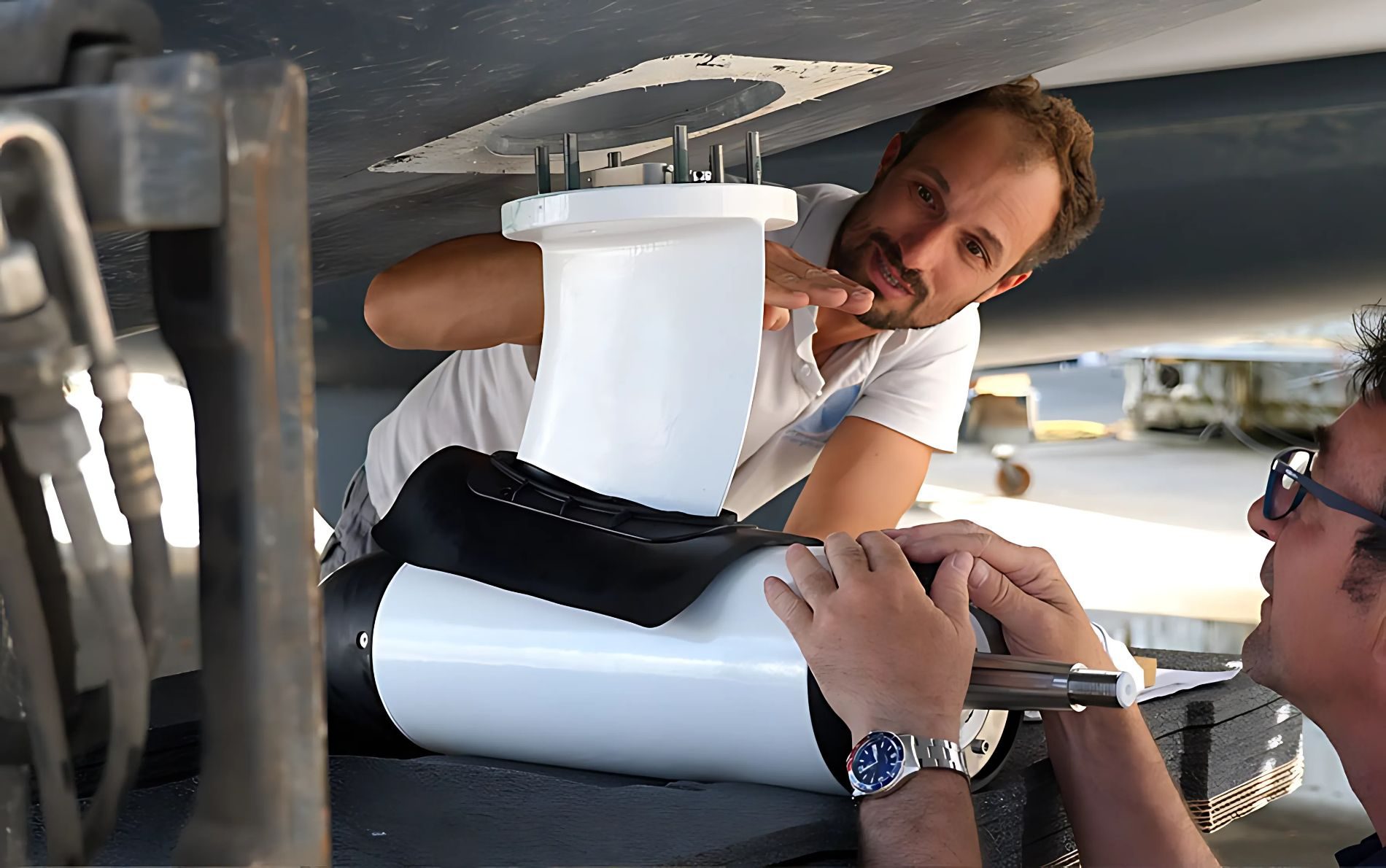
- ☀️ Renewable energy onboard – integrated solar panels and hydrogeneration
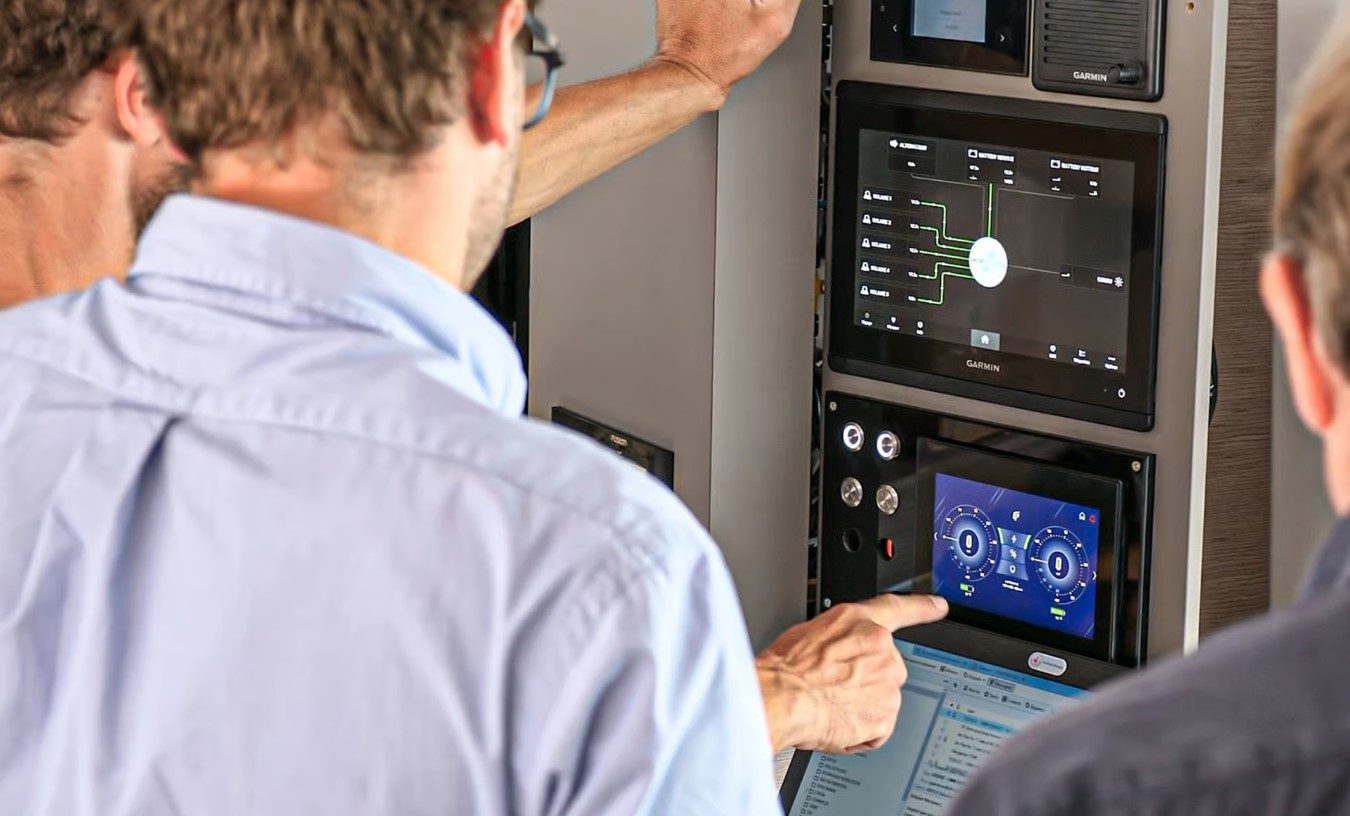
- ⚙️ Smart Cruising systems – optimised energy management
- ♻️ Eco-design and waste reduction – recyclable and bio-sourced materials
The roll-out began in 2023 with electric propulsion available on the Astrea 42, Elba 45 and Aura 51, extending in 2024 to the Isla 40 and Tanna 47. By 2025, the entire Fountaine Pajot range is offered with ODSea+ low-emission options.
ODSea Lab stakeholders
- Associations & Initiatives
Partnerships with local NGOs and projects such as the Low Tech Lab’s “Biosphères”, plus collaborative innovation with RexH2 hydrogen technologies. - Employees
Awareness campaigns, waste management, and the adoption of sustainable practices within shipyard operations. - Suppliers
Low-carbon criteria for selection, transparency, and joint initiatives to cut emissions throughout the supply chain. - NGOs & Alliances
A three-year partnership with WWF France to protect Posidonia seagrass in the Mediterranean, including mapping of anchoring areas and educational campaigns. - Owners & Communities
Engagement through initiatives such as Trash Tuesday, encouraging owners and crews to take part in beach and coastal clean-ups.
Technology and R&D
- Investment in alternatives energies and development of Smart Electric and Smart Hydro technologies.
- Launch of the Samana 59 Smart Electric REXH2, the world’s first hydrogen-hybrid cruising catamaran:
- 70 kW hydrogen fuel cell
- 63 kWh LiFePO₄ battery bank
- 42 m² solar panels generating 6,000 Wp
- Project “La Licorne”, an experimental prototype using recyclable and bio-sourced materials.
Renewable Energy Onboard
- Wind: Up to 600 W via compact wind turbines
- Hydrogeneration: Up to 1,000 W at 8 knots from hydrogeneration propellers
- Solar: 400 W to 2,000 W depending on model, seamlessly integrated into the design